
What Doesn’t Kill You: The Real Cost of a Lifetime of Stress.
Dec 05, 2025
In 1888, Friedrich Nietzsche published Twilight of the Idols, in which he wrote: “Was mich nicht umbringt, macht mich stärker.” (What doesn’t kill me makes me stronger.)
This sentiment was a critical part of Nietzsche’s Übermensch (Superman) concept; a vision of humans who create optimal lives in accordance with their own values, rise above herd mentality, and live with deep authenticity and creative power.
Both the quote and the concept have been twisted by others, either in ignorance or in service to their own agendas. The idea of an idealized life has nothing to do with physical strength, dominance, or superiority over others, and everything to do with mastery over oneself.
The Misunderstanding
There are two levels of misunderstanding that surround the “What doesn’t kill you” quote.
The first is that Nietzsche didn’t mean that simply living through difficult times results in strength and resilience. His intent was that hardship forces you to expand your capacity for challenge, deepen your self-understanding, and evolve beyond who you were.
This is an active process that requires effort and action on the part of the person undergoing the trials. Strength is not passively added as a function of living through challenges—it is revealed by the removal of weakness.
He wasn’t saying that suffering is good or desirable. He meant that when you consciously deal with suffering, it reshapes you. You become a more resilient, self-aware version of yourself.
The statement is a challenge, not a comfort. Nietzsche was provoking: If this hardship didn’t destroy you, what are you going to become because of it?
I write extensively on these concepts as foundational to the Hardcore Happiness ethos (authenticity, self-sufficiency, creativity, discipline) and while they bear repeating, they are not the focus of this article.
I want to address the second misunderstanding, which is much more nuanced and subtle, revealed only after long periods of lived experience.
The Effects of Time: When Stress Stops Helping
You can, indeed, become stronger—mentally, physically, emotionally—as a result of consciously navigating hardship. There is an art and science to growth after trauma; since bad stuff is going to happen anyway, it is in your best interest to learn how to benefit from having consciously navigated it.
Taken as discrete, time-limited events, extreme challenges can make us stronger and more resilient. We are built—mentally and physically—to grow from acute periods of stress. This can be seen in a literal, physical sense: bones and muscles grow when they are stressed. This is why people go to the gym.
The keyword here is acute: short-term events followed by periods of adequate rest. To continue the analogy, athletes know that physical development relies on careful nutrition, downtime to rebuild damaged muscle fibers, and sleep.
But sometimes the stressors don’t let up.
When the challenge, the trauma, the exertion, the heartbreak continues unabated, the opportunities for growth are lost. Sometimes, the periods of rest and recuperation are scant, if they exist at all.
This is a completely different situation, one with only negative ramifications.
Short-term, acute stress is adaptive, and necessary to gain and maintain strength and resilience. Long-term, chronic stress is unbelievably toxic.
When Too Much Is Too Much: The Cost of Constant Overload
Chronic stress leads to exhaustion; depletion of the mind and body’s ability to rebuild and maintain health. I have written extensively about Dr. Hans Selye’s genre-defining and still relevant work on the General Adaptation Syndrome, in which he brilliantly described the effects of chronic stress in terms of the hypothalamic-pituitary-adrenal (HPA) physiologic axis. My purpose here is not to revisit that work, but to discuss the psychospiritual toll that comes with exhaustion.
We have normalized—even idolized—an unrelenting, high-stress lifestyle as the “price of success” in business, parenting, relationships, physical development, even caregiving. All part of modern life.
But it is destroying us.
We are bombarded with images and statements that urge us to push harder, work longer and sacrifice more if we want to achieve “success” in the manner portrayed in the media (social and conventional) and lionized by our friends and family.
This has resulted in an unrecognized public health crisis, and one of the most insidious obstacles to your happiness.
The bill for this “advice” has come due in the form of cognitive decline, emotional dysregulation, physical illness, breakdown of relationships, and shortened lifespan.
Our choice to adopt a chronically stressful lifestyle is—objectively, statistically—killing us.
But it’s worse than that.
The Limits of Human Recovery: When “Too Much” Becomes Permanent
I travel a lot. My home is more “home base” than permanent residence. As a result, I see and interact with many people in many locations. It’s a major part of my job and purpose as a writer.
Everywhere I go, I see the results of an alarming increase in allostatic load—the cumulative burden of chronic stress.
The more obvious effects are there—obesity, anxiety, substance abuse, maladaptive habits; more irritability, less tolerance—but if you look closely enough, you will see another level.
Across geographic areas and cultures and socioeconomic levels and race and gender, I see the aftermath of psychological and spiritual famine.
People are isolated, disillusioned, sleep-deprived; tired, sad, lonely and lost. Our coping skills have devolved, as a result of chronic embattlement, into coping escapes.
And the escapes are themselves lies; they lead only to deeper despair. Overeating, overwork, porn, substance use, doomscrolling and the like are simply numbing, not helping.
Like any quick fix, the dopamine-hit pursuits bring little relief, serve to distract you from the real problem and as a result, eliminate any chance of real solutions.
Eventually, burnout and learned helplessness become your reality and you just give up.
Which part of all this sounds like happiness to you? Does this lifestyle—even if it makes money—fit your definition of real success?
Becoming Übermensch: A Modern Guide to Nietzschean Self-Mastery
There is something to be said for working hard—harder even, than is typically a good idea—for short bursts of time, with adequate periods of recovery. Acute stress is a good thing, and can bring great results.
But don’t be fooled into forever thinking that, “someday, it will all be worth it.” The cemeteries (apologies to Charles de Gaulle) are full of people who almost made it, and died unhappy and alone.
The longer I live, and the more chances I have to observe and work with people, the more convinced I am that there are thresholds beyond which complete recovery is difficult or impossible.
But the good news is that we can still be Übermensch; supermen and superwomen in the Nietzschean sense: self-directed and defined from an authentic sense of purpose, able to live optimally, think critically and contribute creatively.
It is critical that you monitor your stress levels, at every stage of life.
A Practical Blueprint to Protect Your Peace
Force yourself to have periods of rest and recuperation.
Consciously evaluate what you are fed in the media, since you can’t escape it.
It is critical that you mindfully take stock of how you feel—the advice and opinions of others be damned.
And then, armed with self-knowledge and a heroic measure of honesty about your emotional state, take action to Protect Your Peace:
Overstimulated? Unplug.
Tired? Rest.
Lonely? Find (or build your own) community.
Lethargic? Exercise.
Broke? Learn to live within your means, whatever they are.
Unhealthy? Develop the discipline to mind your diet.
Anxious? Take steps to deal with it.*
Addicted or dependent (on drugs, social media, porn or anything else)? Stop.
Can’t do it on your own (whatever “it” is)? Reach out for help. EVERYONE HAS BEEN THERE.
Make time to sleep in, walk in nature, laugh at something, relax with friends, be intimate with someone, pursue (or develop) your hobby, get (and give) a hug.
Study your field. Keep up with that which once interested you.
If you’re a creative, consume what you produce: if you write, read. If you make music, listen. If you paint, observe. If you film, watch.
As Jordan Peterson has said, “Treat yourself like someone you care about.”
Do it now and do it continuously, while you still can and want to.
What Doesn’t Kill You…
Mind your stress. Because what doesn’t kill you…
can leave you broken.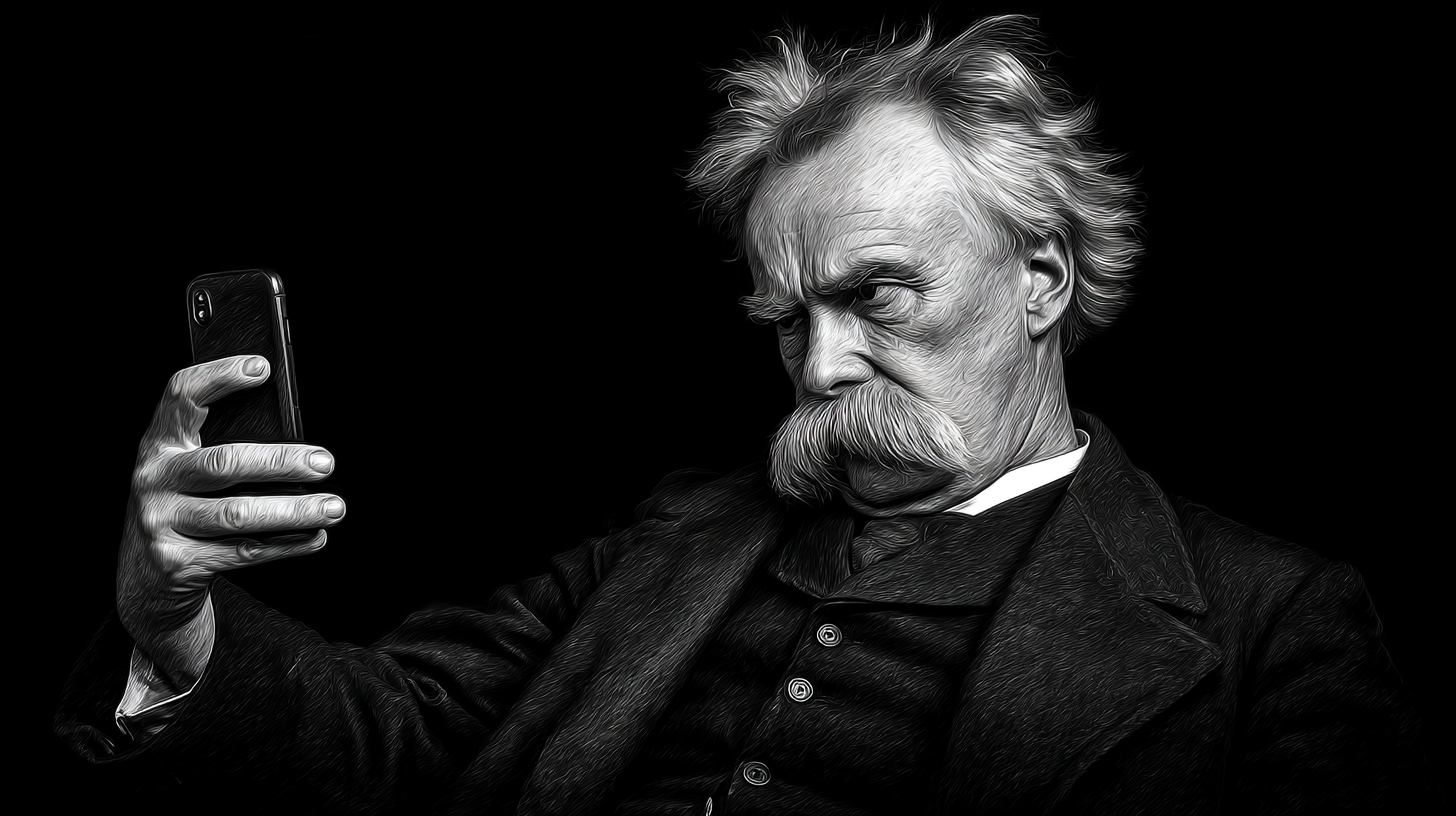
My novel, The Calling is now available in print and as an eBook!
*Get my FREE guide, Five Ways to Calm Anxiety NOW! (just click this link)!
The Hardcore Happiness podcast is live - in video form on YouTube, and in audio form wherever you listen to podcasts. Click here to go to the podcast page where you can see past episodes and listen to the latest. Come subscribe so you never miss an episode.
To learn more about how to use these concepts or to inquire about working with me, go to the Jeff W Welsh website, subscribe to my Substack or Medium accounts or the Hardcore Happiness blog page, and follow my Instagram account for daily insights.
- JWW
Subscribe to the HARDCORE HAPPINESS blog
Never miss a post, and get goodies meant only for our community!
We will never sell your info. Ever. EVER!
