
Time Stand Still
Jan 24, 2026
Freeze this moment
A little bit longer
Make each sensation
A little bit stronger
Experience slips away…
— Neil Peart, “Time Stand Still,” Hold Your Fire, Rush, 1987
The Professor (IYKYK) commanded my attention for decades, as he did millions of others. Yes, I was (and still am) in awe of his preternatural prowess as a percussionist, but what resonates with me to this day—years after his departure from this plane—is his lyrics.
Even if you’re not a Rush fan (what’s wrong with you?), take a moment to listen to the above-referenced track. The music is wonderful, of course, but the lyrics are poignant and profound.
If you have any sense of tempus fugit whatsoever, you know the longing to slow things down. As you get older, the urge becomes more frantic; digging your heels in as you approach the edge of a cliff.
In objective reality, we can not make time stand still, nor even slow it’s passage (we will leave discussions of the Special Theory of Relativity for another time), but we can alter our subjective experience of time’s passage.
Why Time Feels Faster as We Age
When you’re seven years old, a summer day (defined as the span between “Go outside and play!” and “Come home when the streetlights come on!”) lasts for eons. We are so absorbed in the experience of the fresh new world that our attention is wholly removed from the ticking of the clock. A second-grader probably does not understand the math behind time dilation, but can certainly approximate it in perception.
Then, as the shininess of the world dims and is replaced by the machinations of commutes and careers and family, the days pass more quickly. Soon, the span of time between 30 and 50 is but a flash compared to that long-ago summer day.
Towards the end of the journey, it is all too common to feel the regret of time that has actually flown, and too late to do anything about it.
And so I offer two suggestions that work for me, to apply the brakes to the perception of an already too-brief lifespan; to more deeply appreciate the passage of time.
How to Slow Time With Memory and Attention - The Mental Snapshot
I was a weird mystical little kid (and am now a weird mystical adult). For some reason, I was aware of my finiteness, of the fleeting nature of experiences, in a way that should not normally burden children. Memento mori has no useful place in the consciousness of a five year-old, but there I was.
My father had taken me to Disneyland, and the first ride we took was the Disneyland Railroad, a narrow-gauge train that departs from Main Street, USA and circles the park as it has done since 1955. It was the most magical thing I had ever experienced, and I as I rode, I was acutely aware that it would be over soon. I wanted to somehow keep the experience with me after the day was done, so I made a mental snapshot of the side of the train, the doorway and the park beyond, the feel of the seat and the metal railing on the side. My hope was that if I apprehended the moment in enough detail, I could recall it anytime and relive the experience.
It apparently worked, because now—more than 60 years later—the memory is intact and instantly brings me back to that moment. The relentless onslaught of time has been momentarily defeated, in experience, if not in fact. “Time goes, you say? Ah, no! alas, time stays, we go." said Henry Austin Dobson (originally in Welsh).
I now have a collection of these time-defeaters, frozen moments that preserve and protect the experiences that would otherwise slip away:
- A “W” on a wall, seen while swimming with my sister, next to a cruise ship in the Caribbean. She remembers it as well, and uses the memory for the same reason.
- The look and feel of the deck around my favorite hot tub in Sedona, the smell of the cool air, contrasting with the chlorinated warmth of the water;
- The view of Paris from the top of the Eiffel Tower; the feel of the railing and the wind in that moment;
- The sound of the bells and the extraordinary sight of the gilded statues in a Buddhist temple in Chiang Mai...
The experiences need not be exotic, just meaningful. Most of my mental snapshots are mundane but meaningful, such as the look and feel of my grandfather’s headstone in a Fresno cemetery.
If you want to try this, find a situation that you want to remember, then memorize one small detail as vividly as you can: the smell, the air temperature, the sounds and the feel of the air, the smells of the place. Commit that to memory and it will trigger the rest of the scene, and serve as an anchor safe from time, for as long as you can hold the vision of it.
How Meaningful Human Connection Slows the Experience of Time
The other practice that has served me well in my quest to deliver meaningful experiences from the ravages of time is to intentionally and mindfully interact with people that are otherwise unknown to me.
I am somewhat of a nomad, and travel frequently. I like to fling myself far and wide, but the majority of my time is spent in the Great American Southwest. I frequently traverse the Navajo Nation, and there is a specific place I stop every time I am privileged to be among those who can still speak Diné Bizaad.
When I stop, I have a conversation with the person in the store that actually requires some thought from both of us. The last time, the conversation started with “What’s your name?” After introductions, I asked, “If you could make any one wish come true, what would you wish for?”
At this, the 24-year old Navajo woman stopped and looked at me quizzically, then thoughtfully answered my question, and we had a real conversation, far beyond the usual “Have as nice day” patter that is the hallmark of a person caught in the rapids of time flowing too fast.
I have had so many memorable conversations by intentionally being in the moment with a “stranger,” actively listening to their stories, no matter how brief, and then thoughtfully responding. (My kids—when they were kids—would ask, “Why do you talk to everyone, dad?” This is why, kids…)
And so I have met a man on the side of the road in Arizona, who once played the tuba, and a shopkeeper in Cardiff who was amazed that my last name was “…actually Welsh,” and General Chuck Yeager, who had just broken the sound barrier in an F-4 in an airshow demonstration, and so many others.
Not too long ago, there was a server in a very busy restaurant in Oregon who seated me in the madness of a Christmas Eve rush. I visited the restaurant again later, when things were quieter, and to my surprise she said, “I remember you from the other day.” After the meal, I engaged her in a brief conversation (now that she had some time) and we learned a bit about each other. As I turned to leave, she said, “I’ll remember you.”
And that is the whole point.
Present Tense
These tactics work because they require a moment of mindfulness; complete attention to the task at hand—mentally crystallizing a moment in time, or authentically engaging in a conversation— for that moment.
Mindfulness has as a prerequisite, a unique factor that is lacking in most other daily functions: it demands you to be present. And when you are fully, completely present, you are in the present.
Therein lies the true magic, the ability to make time stand still, as a function of consciousness, outside of relativity and physics and the motion of the second hand:
The only time in which you actually exist, the only time you really have is now.
To live in the past is to waste the current moment in exchange for what has already passed. If you live entirely in the future, you aren’t aware of your actual life as it passes, moment by moment.
To make time stand still, do your best to be aware of each moment as it happens, before it becomes the past. Mental snapshots and meaningful conversations serve to preserve experiences and bring them into the now, as part of living experience.
Time Stand Still
I am fully aware of the mental horsepower demanded of this task. We—especially in the Western world—have little experience paying attention to the present, as it progresses moment by moment. It requires considerable practice to keep our busy minds from randomly wandering to past events or dwelling upon future possibilities.
But over time you will gain the ability to stop time, if only for a flash. In the brief moments you are truly present in the present, you dwell in the eternity of the current moment.
And that’s the best we can hope for.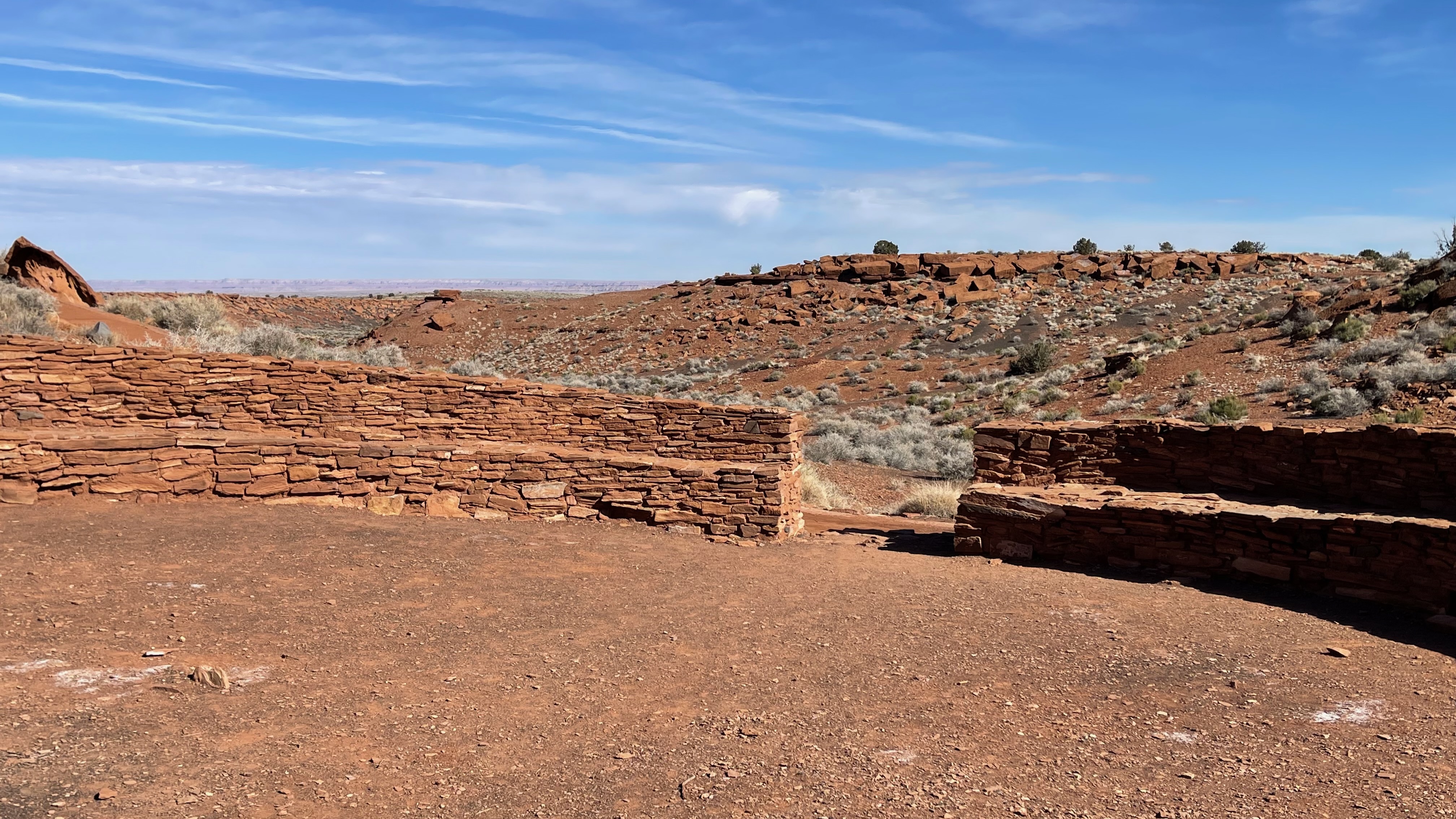
My novel, The Calling is available now in print and as an eBook.
Click here to subscribe to SHADOW & STAR, my free weekly newsletter.
To learn more about how to use these concepts or to inquire about working with me, come visit the Jeff W Welsh website, subscribe to my Substack or Medium accounts or the Hardcore Happiness blog page, and follow my Instagram account for daily insights.
- JWW
Subscribe to the HARDCORE HAPPINESS blog
Never miss a post, and get goodies meant only for our community!
We will never sell your info. Ever. EVER!
