
3,000 Steps
Jan 16, 2026
Sometimes the most important messages come with the fewest words.
☩ ☩ ☩ An Existential Excavation ☩ ☩ ☩
Something miraculous just happened to me.
Like a song in a dream, it must be captured quickly, lest it lose it’s vibrance, fade to black-and-white, and completely disappear. I memorialize it here to remind myself of the gift contained in the experience, and to share it with you.
As I recently described elsewhere, I finally managed to burn myself out. All the way out.
As in, I’m in a beautiful place but I don’t care because it’s all shades of grey; short of breath so how much time can I have left anyway; screw it—I’m done and it doesn’t matter, out.
☩ ☩ ☩
I always prided myself on having “broad shoulders” (metaphorically, anyway) because I could carry any burden, shrug off any loss, bounce back from any betrayal, find freedom in abandonment. And just keep going.
Attacked by weak, selfish cowards with no ability to create something themselves, who then try to take what I made and leave a wake of destruction in the process? Been there, done that.
Betrayed and abandoned by people who flourish as a direct result of my love and sacrifice? Well, we don’t give because of the expectation of reward, we give because it is the right thing to do.
I will smile, be the better man, and rebuild.
Because that’s what makes us men. We lick our wounds, square our shoulders, stiffen our upper lips and, with a steely-eyed gaze, rise again like the metempsychotic phoenix of old.
Shake it off. Rub some dirt in it.
This mindset allows us to take a beating and keep on giving; to act with compassion in the face of adversity. It works to keep us from devolving into entitled, whiny sheep in the company of wolves.
And yes, of course this set of circumstances applies to women as well. I use the term “men” because—in my time and culture—this was the explicit value set passed from father to son.
This toxic, “big boys don’t cry” indoctrination works well to keep us moving ahead, focused on progress instead of regret, acting in the future and dumping the baggage of the past.
Until it doesn’t.
☩ ☩ ☩
I have a graduate degree in clinical psychology, worked in healthcare (mental and physical) for decades and even though we typically suck at diagnosing ourselves, I was able to see that what was happening to me wasn’t just a temporary case of burnout.
I knew all about allostatic load, the crippling result of the mind and body failing under the cumulative load of a lifetime of intense, chronic stress. It was one of those things that happen to someone else. Obviously, if you are trained to diagnose and treat that stuff, it can’t happen to you, right?
Right?
The scary part was, even when I realized that I was in trouble, I didn’t care. The more I looked at the last few years’ worth of symptoms (that I won’t bore you with, here) and put it all together, the more I thought, “Yep. This is bad.” Followed by, “Oh, well.”
After all, if—with all my training and experience—I can’t think my way out of this, I might as well hang up the gun belt and peacefully wait for the sun to set.
But then, the "still, small voice” spoke up, as it has so many times before, as a function of my dual-processing, science-meets-instinct mind.
I have always been at home in the land of neurochemicals and cortisol levels and C-reactive protein titers, as well as the mystic, spiritual world. You wouldn’t be the first to hear me say something like, “Well, that patient is a spike-four profile on the MMPI, so what do you expect. Plus, he’s a Scorpio.”
It was this left-hand, dark-side, shadow archetype that quietly asserted,
Thinking is exactly your problem.
☩ ☩ ☩
A stupa is a physical structure that contains consecrated items and sacred relics dedicated to ending the suffering of all sentient beings. There are fewer than 100 of them in the Western Hemisphere. There is a 36-foot tall stupa within walking distance of where I sleep, built with great ritual and reverence in the Tibetan (Vajrayana) Buddhist tradition.
I’m not Buddhist. But since it opened to the public over 20 years ago, I have been a regular participant when I live in this town.
I engage in pradakshina, a wonderful Sanskrit word that literally means, “to the right,” but has come to mean “walking around in circles (clockwise).” It is common practice for Buddhists, Sikhs, Jains, Hindus and many others.
Here’s how it works: Go to the stupa. Walk around it in circles. To the right.
For me, it’s walking meditation. My thoughts feel stronger here, more focused, as though they are somehow amplified.
I’ll be darned if there isn’t a quote (that I recently read, years after coming here regularly) from a venerable Buddhist Master that says something like: “The power of prayer is magnified at a stupa.”
My logical scientific brain not only had struck out, it was a major part of the problem. The more I thought, the deeper the pit became.
Anxiety/depression/burnout is more than a diagnosis to be “treated.” It is a herald, Mercury come with an important message: pay attention—there is something here to learn about yourself. The lesson can be loud, but is almost always non-verbal.
So I listened to my mystic, existential, non-falsifiable brain.
It told me to come here, and walk around in circles. To the right.
☩ ☩ ☩
The first couple of laps didn’t seem to have any effect. I was seeing everything in a mental fog anyway and began to think maybe I was wasting my time.
Then I remembered the voice, and realized I was drowning in metacognition, thinking about thinking.
So I gave up and shut up and just kept walking around the stupa.
60 times.
3,000 steps.
I don’t know what the tourists thought of this 6’4” white-bearded man in mirrored Ray-Bans, earrings, jeans, boots and a black cowboy hat, walking around and around. I think they just kept a silent, respectful distance. I wasn’t really thinking about them.
Don’t miss the point here: the functional ingredients of what was about to happen were surrender and silence.
Mental silence, that is; the ability to turn off thought. I was aware only of the bricks passing under my feet, round and round.
After the 60th circumambulation, I sat on a white plastic chair facing the stupa and just existed.
For three hours.
I have some meditation experience, so I was (mostly) able to sustain my quiet mind, on the edge of the hypnagogic fog that occurs as you are falling asleep.
I was aware of the joyful children spinning the Mani wheels, the many people coming and going, most in quiet reverence, and one adorable black and white, un-cropped Staffordshire Terrier with big floppy white ears.
As soon as these images came into my consciousness, I acknowledged them and then let them float away. My goal was to keep my mind as empty as possible, and listen.
And this is what I heard:
Since before the time I could drive, I have been engaged in three careers - teaching, healing and music (which, I think, is a combination of the first two).
I have worked as a music teacher (still do), a paramedic, physician assistant, respiratory therapist, hypnotherapist, psychotherapist, and counselor. I have been a teacher, professor, and clinical instructor in a variety of settings, from one-on-one sessions to teaching in major medical centers and universities.
Why?
If I’m being vulnerably honest, it’s probably a combination of things. I enjoy helping people create better lives (still do). It feels right (an essential ingredient to choosing one’s purpose). And somewhere way back when, I learned to be a people pleaser.
So my life, since I was 14, has been in giving mode.
That’s what we do, isn’t it? Helping our fellow man is among the noblest of goals, and I still believe that.
Right up until the point that there’s nothing left to give, in terms of energy.
So the miraculous event I experienced was a very clear message, manifest once I stopped thinking: Change or die (energetically, at least).
Foreign and bizarre though it feels to me right now, I need to switch to a new plan of action. This new paradigm has two parts:
First - engage in activities that refill my energy supplies. As good as it feels to be the one who teaches, gives, assists healing, I need at least reciprocal interaction that nourishes and sustains me.
Second - maintain silence, to stop the leakage of mental/psychic energy. Not literal silence, but the intent to not broadcast the details of every thought and plan, as a way to protect my peace.
The first feels selfish and the second, reclusive. This way of being feels like anathema to me. But I have seen, clearly now, where it will go—where I will go—if I stubbornly stay the current course.
I don’t exactly know how to do these things, yet. I wanted to write them down so I don’t forget and slip back into my habitual mode of being.
I do know that it is time to regroup and restock and replenish, instead of trying to pour from an empty cup.
And I know that, miraculously, I feel better, 3,000 steps later.
“You do not have to believe in stupas just as you do not have to believe in the rain; it will come down naturally if there are the right conditions. So the benefit of the stupa happens quite naturally because of its structure and content. It is a manifestation of our true nature, beyond the confusion of words.” – Akong Tulku Rinpoche (Emphasis mine.)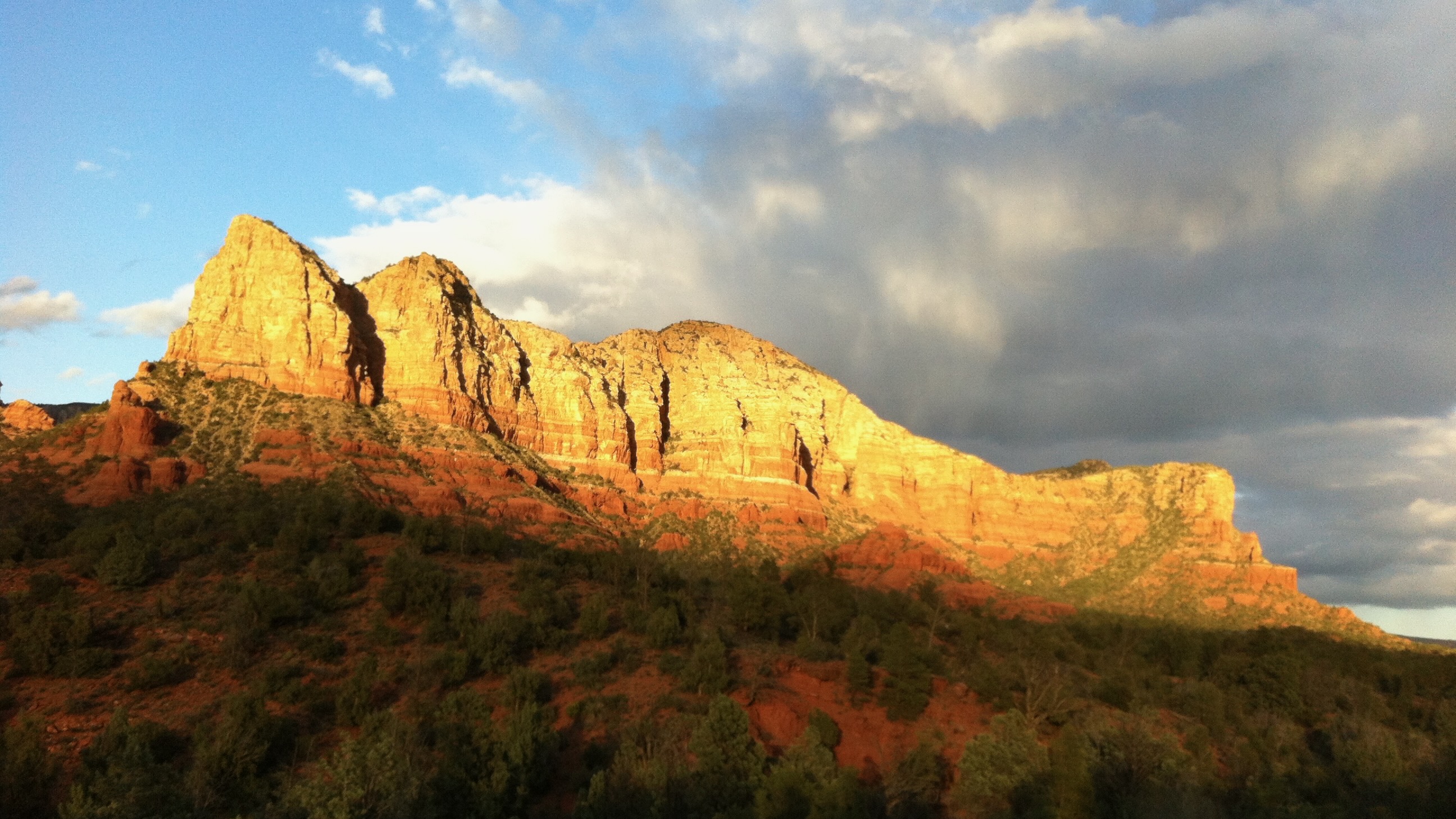
My novel, The Calling is available now in print and as an eBook.
Click here to subscribe to SHADOW & STAR, my free weekly newsletter.
To learn more about how to use these concepts or to inquire about working with me, go to the Jeff W Welsh website, subscribe to my Substack or Medium accounts or the Hardcore Happiness blog page, and follow my Instagram account for daily insights.
- JWW
Subscribe to the HARDCORE HAPPINESS blog
Never miss a post, and get goodies meant only for our community!
We will never sell your info. Ever. EVER!
