Guardrails
Jun 19, 2026
It is called L’appel du Vide (“the call of the void”).
I was speaking with a family member who was allowing me to live vicariously through her descriptions of a trip down California’s incredibly scenic Highway 1. She mentioned that many of the rest stops, while conducive to great pictures, had no guardrails.
If you are familiar with that stretch of one of California’s most beautiful coastlines, you may have heard of the “West of the 1 Club”; a group of people who have gone west of the one (i.e. over a steep cliff, dropping down to the ocean) and lived to tell the tale.
The fact that there is a “Club,” macabre and tongue-in-cheek though it may be, says all you need to know about Highway 1, guardrails and the intermittent lack thereof.
This family member is—like me—a dyed-in-the-wool hodophile, but a childhood trauma nearly earned her membership in the West of the 1 fraternity.
Tragedy was (narrowly) avoided, but the episode imbued her with a life-long predisposition to be VERY aware of vertically precipitous areas.
In plainer terms, I have seen her crawl to the edge of the Grand Canyon. From about a quarter-mile away.
She was recently telling me about her specific sub-genre of acrophobia when she pulled over to get a picture. I asked “Are you afraid of falling?” I knew full well what her answer would be.
“No,” she said without hesitation, “I’m afraid of jumping.”
“It’s not a suicidal thing; I have absolutely no desire to hurt myself. I just don’t trust myself to get too close to the edge. Why don’t they have more guardrails?”
“Free choice?” I quipped.
☩ ☩ ☩
Ten miles northwest of Taos there is a bridge.
The bridge is narrow and short; two lanes wide and only 1,280 feet (390 m) long. It is made of steel and in 1966 was named “Most Beautiful Steel Bridge.” The Rio Grande Gorge Bridge, predictably, spans the jagged chasm that the Rio Grande River has carved into this otherwise relatively flat terrain.
There are three things you notice when you park at either end and make the short walk across.
First: The steeply sloped land at either end of the bridge is dotted with memorial markers.
Second: There is a stainless steel enclosure with a button and a speaker at each end, on both sides. The sign on the enclosures says, “CRISIS HOTLINE. THERE IS HOPE. MAKE THE CALL.”
Scrawled in red marker above one of the signs is a handwritten message: “You are someone’s why.”
Third: When you get to the center and lean against the guardrail (which comes approximately to the top of my thighs—nowhere near my waist), you can look some 650 feet straight down to the narrow river and the rocks below.
The stories of those who end their lives here includes many who are tragically depressed, as you might expect. But—if you can stand the soul–crushing accounts of the more than 120 who have jumped—you uncover some that were unexpected.
Like the young man who—with no history of mental illness, no reported suicidal ideation, and no recent triggers identified—walked the bridge on vacation with his family. He reportedly suddenly said “I love you, mom,” and sprinted to—and over—the side.
The pedestrian walks are closed now, after a recent surge in suicides.
For some, the call of the void is too strong.
☩ ☩ ☩
The prevailing psychological explanation for the High Places Phenomenon (a subset of L’appel du Vide) has nothing to do with suicide or extreme risk taking. It appears, instead, to be a protective mechanism. You imagine a worst case scenario, then experience a strong negative reaction that prevents the imagined behavior.
Unless it doesn’t.
It’s not possible to construct enough guardrails to prevent us from acting on ill-advised impulses.
As is the case with so many life situations, it is up to us to strike a balance between imposed protection and freedom to take risks.
There is a psychological analogy to be made to Benjamin Franklin’s “Those who would give up essential Liberty, to purchase a little temporary Safety, deserve neither Liberty nor Safety.”
Many of the scary precipices we face are not physical.
There is a line in the lyrics of Van Halen’s “Ain’t Talkin’ ‘Bout Love” that says, “I've been to the edge/And there, I stood and looked down/You know I lost a lot of friends there, baby…”
How many times have you been “close to the edge”?
Perhaps—if we can remain mindful—we may see that there are three alternatives, when we hear the call of the void:
- Retreat to safety and choose another path entirely.
- Abandon our protective instincts, and jump.
- Or look down at the chasm, calmly evaluate the balance between risk and freedom…
And fly.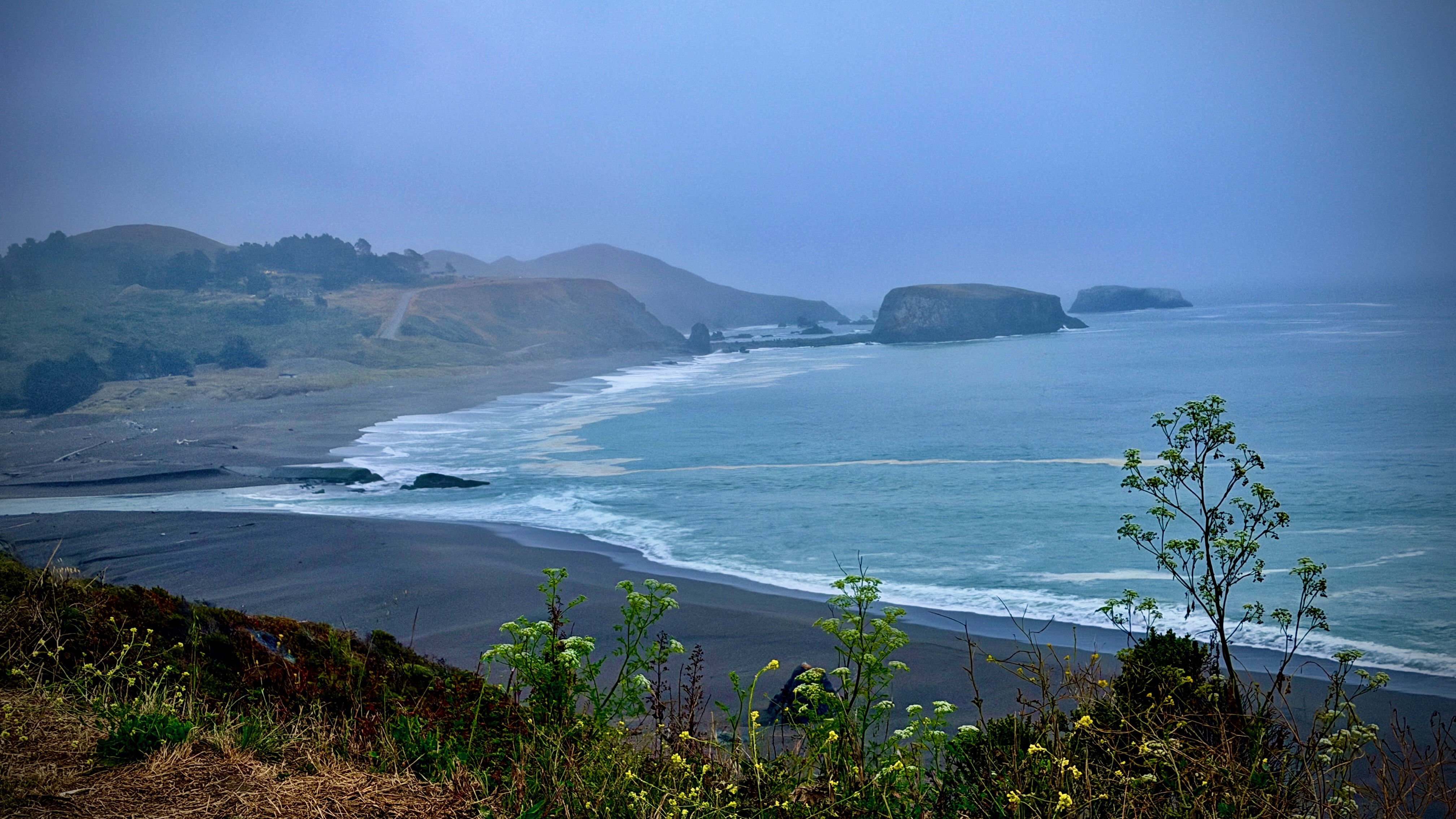
Read my recent interview with Dr. Mehmet Yildiz here.
My novel, The Calling is available now in print and as an eBook.
Click here to subscribe to SHADOW & STAR, my free weekly newsletter.
To learn more about how to use these concepts or to inquire about working with me, go to the Jeff W Welsh website, subscribe to my Substack or Medium accounts or the Hardcore Happiness blog page, and follow my Instagram account for regular insights.
- JWW
Subscribe to the HARDCORE HAPPINESS blog
Never miss a post, and get goodies meant only for our community!
We will never sell your info. Ever. EVER!
